


MyINFINITI App
4.7353.00 Reviews
App Specs
- Version
- 3.12.110
- Updated On
- License
- Free
- Downloads
- 100,000+
- Developer
- Nissan North America, Inc.
- Categories
- Auto & Vehicles
- Platform
- Android
Screenshots
 Analysis by AppCompare
I spent time with the MyINFINITI App as a companion for an INFINITI vehicle, and my first impression was that it makes the ownership side of driving feel less scattered. Instead of treating the car, service visits, and basic ownership tasks as separate things, it gives them a shared place on the phone. That sounds simple, but it matters when I am trying to remember maintenance details, prepare for a dealership visit, or check something about the vehicle while away from it.
This is a free Auto & Vehicles app from Nissan North America, Inc., designed specifically around INFINITI ownership rather than general car shopping or navigation. It is rated for Everyone, has an average rating of 4.8 from around 2.4 thousand ratings, and has passed the 100 thousand install mark. Those figures suggest that it has found a clear audience, although the real question is whether it fits the way you manage your own car.
How the app feels to read and navigate
The strongest part of the experience is its focused purpose. I do not open it expecting a map, a fuel-price comparison, or a giant database of vehicles. I open it because I own or manage an INFINITI and want ownership information in one place. That narrow focus helps keep the experience more understandable than a broad automotive app packed with unrelated tools.
For someone who prefers plain, task-based navigation, that is a meaningful advantage. The useful mental model is not “learn a complicated car system”; it is “find the ownership task I need.” A person checking service information can approach the app differently from someone looking for vehicle guidance, yet both are working within the same INFINITI-centered environment.
I also found that the app makes more sense when I use it before I need it. Setting it up while relaxed, reviewing the available sections, and confirming that the vehicle information is correct is much easier than trying to learn it beside a busy road or immediately before a service appointment. That is a small habit, but it improves the experience considerably.
My most useful tip is to treat the app as an ownership notebook, not as a replacement for every driving tool. I would use it to organize INFINITI-related information and preparation, while keeping a dedicated navigation app, the vehicle’s physical controls, and ordinary phone functions available for tasks outside its scope.
Readable information is only useful when it is timely
One practical strength is the way a dedicated owner app can reduce the need to search through old messages, paperwork, or a browser. When I want to prepare for a dealership conversation, having the relevant ownership context close at hand is more convenient than reconstructing it from memory. This is especially helpful for people who find long web pages or scattered documents tiring to process.
Worth Reading Before You Choose

EA SPORTS FC Mobile 26 Is a Bigger Football Game, but It Takes Time

Flipboard Shows What News Apps Must Do Beyond the Feed

Switching to Android Auto Means Rethinking Your Driving Routine

Google Calendar Makes a Crowded Week Easier to Manage

Ludo King Makes the Most of the Minutes Between Plans

Baby Panda World Brings Quick Play to Modern Phones, but Its Game Library Feels Busy
There is still a learning curve. A first-time user may not immediately know which information belongs in the app, which belongs in the vehicle, and which requires direct contact with a dealership. That boundary is important. The app can make ownership administration clearer, but it cannot remove the need to understand the car itself or communicate with service staff when a situation is unusual.
I would also recommend using the app at home to become familiar with its wording and layout. If reading small text, locating controls, or switching between screens is difficult, the best time to identify that friction is before a trip. A calm setup session lets you decide whether the app is comfortable enough for regular use or whether another method, such as printed vehicle information or assistance from a family member, will work better.
Motor and sensory considerations in everyday ownership
For users with limited hand movement, the main benefit of a phone-based owner app is that it can move some ownership tasks away from the vehicle’s controls. I can review information while seated comfortably, rather than reaching into the cabin, searching through a glove box, or trying to read a manual in an awkward position. That does not make every task effortless, but it can make preparation less physically demanding.
The trade-off is that phone interaction still requires touch, visual attention, and enough precision to select the intended item. Someone with tremors, reduced dexterity, or difficulty maintaining a steady grip may find repeated tapping less comfortable than a larger physical control or help from another person. I would not assume that a mobile interface automatically solves motor-access challenges; it simply changes where those challenges occur.
For users with visual fatigue or reduced vision, the app is most useful when approached in a controlled setting with the phone’s own display and text adjustments configured to personal preference. I would avoid trying to read ownership information while walking through a parking area or sitting in a moving vehicle. The app may support planning, but it should not become another source of visual distraction during driving.
People with hearing-related needs may appreciate having written ownership information available rather than depending entirely on an audible explanation. That can make a service conversation easier to prepare for, especially if I want to note questions before speaking with staff. At the same time, the app should not be treated as a guarantee that every service interaction or alert will be communicated in a preferred format. It is one channel, not a complete accessibility plan.
A useful workflow for people who need more time
One of the less obvious advantages is the ability to separate information gathering from the stressful moment when a decision has to be made. I can review the vehicle-related details at home, write down questions, and arrive at a dealership with a clearer idea of what I need to ask. For someone who processes written information more comfortably than fast conversation, this preparation can be more valuable than any single feature.
I would use a three-step routine. First, open the app when there is no immediate pressure. Second, identify the information that needs action and turn it into a short personal checklist. Third, keep that checklist available during the service visit without trying to use the phone while driving. This approach reduces memory load and helps prevent a rushed conversation from becoming confusing.
Another helpful use is shared ownership. If more than one person looks after the same INFINITI, the app can serve as a common reference point instead of leaving one driver as the only person who understands the vehicle’s ownership details. That can support older drivers, new drivers in the household, or anyone who needs extra time to become comfortable with the car. I would still agree on who is responsible for acting on service information, because an app cannot resolve unclear family responsibilities.
Access in different situations
The app is at its best before and after a journey. Before leaving, I can use it as part of a quick ownership check: review what I need to remember, confirm the information I am looking for, and then put the phone away. After a trip, it can help me return to a question that I did not have time to investigate safely on the road.
That distinction is important for users with attention-related needs. A focused owner app can reduce the temptation to browse unrelated automotive content, but a smartphone is still full of distractions. I would make the decision about what I need before starting the car, and I would avoid opening the app in traffic, at intersections, or while walking through an active parking lot.
For a realistic example, imagine that I am taking an INFINITI to a dealership after noticing that I need to discuss routine service. Rather than searching through email while waiting in the service lane, I can prepare at home by reviewing the app, noting the questions I want answered, and keeping the conversation focused. If I am accompanying a driver who has difficulty remembering details, I can help organize those questions in advance. The app does not replace the technician, but it can make the appointment less dependent on memory.
It is also useful in a quieter home setting for people who cannot easily spend a long time standing beside the vehicle. A user with limited stamina can handle the planning portion from a chair, then complete only the physical checks that genuinely require being near the car. That separation between information and movement is one of the clearest practical benefits I see here.
Where it is less suitable than familiar alternatives
If your main need is turn-by-turn guidance, traffic information, fuel discovery, or general trip planning, I would choose an established navigation or travel app instead. MyINFINITI is not the right tool simply because the trip involves an INFINITI. Its value comes from the ownership relationship, not from replacing every automotive service on a phone.
If you rarely use a smartphone, a paper manual, a direct dealership conversation, or help from a trusted person may feel easier. That is not a failure of the app; it is a question of fit. Adding another digital account or interface can create more work for someone who already manages information better offline.
Likewise, people who drive several vehicle brands may prefer a broader vehicle-management solution if they want one dashboard for everything. A manufacturer-specific app is naturally more relevant to the INFINITI vehicle, but that focus can become inconvenient when a household has mixed brands or when the user wants a single neutral service record.
Remaining barriers and points of friction
The biggest barrier is dependence on the phone as the gateway to ownership information. A phone can be misplaced, low on battery, difficult to read in bright light, or unavailable to a user who does not carry it regularly. I would keep essential driving information accessible through the vehicle and other dependable methods rather than assuming the app will always be ready at the exact moment I need it.
There is also a difference between information being present and information being understandable. Automotive language can be unfamiliar, particularly for a new owner or someone who has never managed service appointments independently. When a term is unclear, I would write it down and ask the dealership to explain it in everyday language instead of making a costly assumption based on a quick screen reading.
Another limitation is situational safety. A phone-based owner tool is inherently unsuitable for active driving use, and that matters for anyone who is easily distracted, has difficulty shifting attention, or needs extra time to interpret information. The safest workflow is deliberate: use it while parked, plan ahead, and let another person handle the phone if the driver needs to remain focused.
Version changes can also affect familiarity. The current version is 3.12.110, and the app was released on July 27, 2022. I mention that because users who depend on a stable routine may notice that mobile apps evolve over time. After an update, I would spend a minute checking where the sections I use most often have moved, rather than discovering a layout change during a time-sensitive appointment.
The minimum operating-system requirement is Android 8.1. That makes the app approachable for some older devices, but anyone using a much older phone should check compatibility before planning to rely on it. For users who share a device, have limited storage, or use an older handset for accessibility reasons, the practical question is not only whether the app is free, but whether the phone can run it comfortably and consistently.
Privacy and account comfort are also part of accessibility in the broad sense. Some people are happy to manage vehicle information digitally; others are uneasy about creating another connected service. I would recommend reading the app’s current setup prompts carefully and deciding whether the convenience is worth the personal routine of maintaining access. If that process feels burdensome, the traditional dealership route may be the better choice.
My inclusive verdict for INFINITI owners
I see MyINFINITI as a useful companion for owners who want a more organized way to handle the non-driving side of an INFINITI. Its focused design can make preparation easier, especially for people who benefit from reviewing information slowly, creating questions in advance, or managing ownership tasks from a comfortable place rather than beside the vehicle.
Its inclusive value comes from flexibility rather than from a promise that every user will find the interface effortless. Someone with limited mobility may appreciate doing planning away from the car. Someone who prefers written information may find it easier to prepare for a service conversation. Someone sharing vehicle responsibilities with family members may gain a common reference point. These are genuine advantages, but they depend on the user being comfortable with smartphone touch interaction and digital account management.
I would recommend installing it for an INFINITI owner who wants manufacturer-specific ownership support and is willing to spend a little time learning the layout. I would not recommend relying on it as the only source of vehicle information, as a driving-time tool, or as a universal solution for a mixed-brand household. Navigation apps, printed material, direct support, and assistance from another person still have important roles.
The free price and Everyone content rating make it easy to try without a financial commitment. With an average rating of 4.8 and more than three hundred written reviews, it has a strong reception among the people who have chosen to use it, though individual comfort will depend on the device, the vehicle, and the user’s preferred way of managing information.
My final view is straightforward: this is most valuable when it helps you prepare, not when it asks you to improvise. Set it up at home, learn where your important ownership information lives, make a short routine that suits your abilities, and keep safety ahead of convenience. Used that way, the MyINFINITI App is a sensible, specialized addition to INFINITI ownership rather than an app I would expect to replace every other automotive tool.
Pros
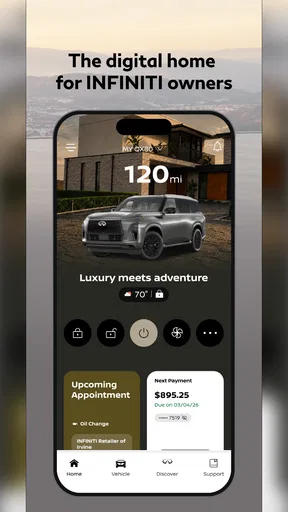
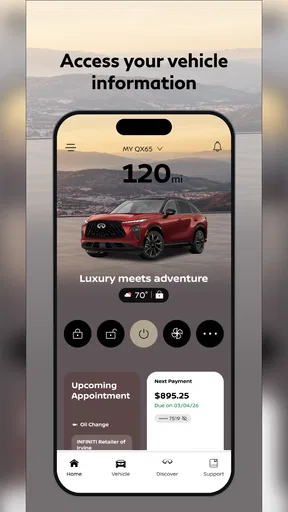
- Schedule service and view maintenance history in one place.
- Locate nearby INFINITI retailers with contact details and directions.
- Access roadside assistance information directly from the app.
- Keep vehicle details organized for quicker support requests.
- Receive useful ownership updates and service-related notifications.
Cons
- Features may vary depending on your vehicle model and region.
- Some functions require an active INFINITI account and vehicle pairing.
- Retailer information may not always reflect the latest opening hours.
- Notifications can become intrusive if too many alerts are enabled.
- Limited usefulness for owners without connected vehicle services.
FAQs for MyINFINITI App
What is the MyINFINITI App used for?
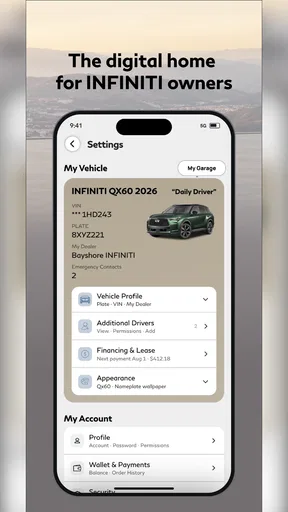
MyINFINITI is the official companion app for eligible INFINITI vehicles. After signing in and pairing a supported vehicle, you can review vehicle information, access maintenance and service details, locate retailers, schedule service in some regions, and find owner resources. Available features may vary depending on your vehicle model, model year, country, subscription status, and the connected services installed in the vehicle.
Which INFINITI vehicles and phones are compatible with MyINFINITI?
Compatibility depends on the INFINITI model, model year, market, and connected-services equipment. Recent vehicles generally offer broader functionality, while older models may provide only basic owner information or may not support remote features. The app is designed for supported Android and iOS devices, but operating-system requirements can change. Before downloading, check the current store listing and confirm that your vehicle is eligible in your country.
Can I remotely start, lock, or locate my INFINITI with the app?
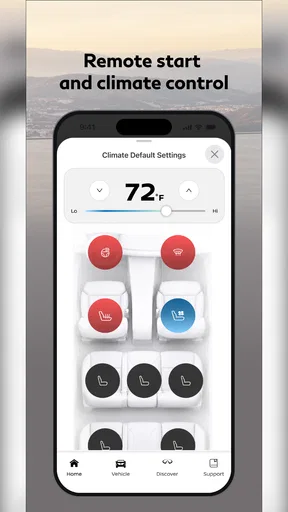
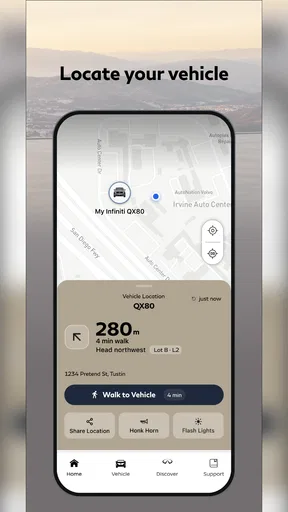
Some eligible INFINITI vehicles and connected-service plans support remote commands such as starting the engine, locking or unlocking doors, checking vehicle status, or locating the vehicle. These functions are not available on every model and may require an active subscription, cellular coverage, and proper vehicle setup. Remote commands can also be delayed or unavailable when the vehicle has weak connectivity, low battery power, or is parked in an area without service.
Does MyINFINITI require a subscription or additional fees?
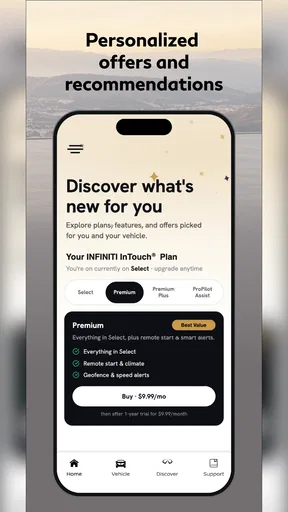
Downloading MyINFINITI is typically free, but certain connected features may require an active INFINITI connected-services trial or paid subscription. The exact plan, trial period, and available services depend on your vehicle, location, and retailer. Standard mobile-data charges may also apply when using the app. Review the terms shown during registration and verify renewal pricing before relying on remote or enhanced services.
Is MyINFINITI safe to use, and what should I do if the app does not connect?
MyINFINITI uses account authentication and vehicle pairing to help protect access to connected features, but you should still use a strong, unique password and avoid sharing your login. If the app fails to connect, check your internet connection, update the app, confirm that your vehicle and subscription are eligible, and sign in again. Persistent problems may require contacting an INFINITI retailer or official customer support.


